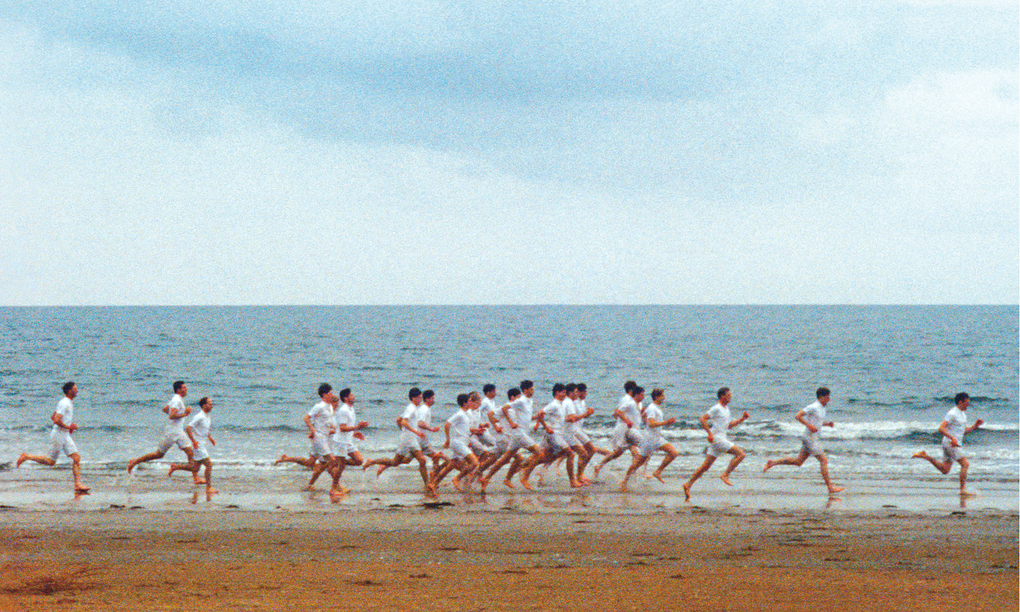
As you get older, the allure, or the capability, or the necessity, of running increases. So, several of my economist colleagues jog, and some even compete in marathons.
I argued that economists should not do this, because of famed economist Keynes' warning, "In the long run, we're all dead."
Good discussion in Managerial Economics last week on barriers to exit. Mining companies face a liability risk of a tunnel collapse. This liability exists whether the company closes its operations or remains in the market. In other words, the liability is a ... sunk cost!
Plagiarism is a big deal in universities. Business schools and their MBA programs are increasingly trying to implement a culture of simply not copying and doing your own work. At the very least, give proper citation to your inspiration. Alas, this is almost exclusively brought down on the students, and, to a lesser extent, faculty. But what about the schools themselves? Are they not held to the same standards? Where is the Turnitin for universities? Below are two course descriptions about the privatization of industries. An interesting course, but from two different universities. The first is from Wharton and the second is from Virginia International University.
MGMT798 - Privatization: An International Perspective
Privatization is sweeping the globe, but it remains one of the
most controversial of economic reforms. The redefinition of boundaries
between the public and private sectors creates new roles and
opportunities for policymakers and business people. This course will
review the international experience with privatization -- the Thatcher
privatizations of the 1980s, the sale ofindustries and utilities in
developing countries, the transformation from central planning in
post-Communist countries, and the recent experiences with privatizing
very traditional public services and infrastructure activities by local
and national governments throughout the world. What practical lessons
can be learned from the myriad of methods adopted in different
countries? What issues arise in privatization transactions and what are
the implications for business and regulatory policy? Who gains and who
loses from privatization and how can deals be structured that improve
productivity and welfare? These questions will be addressed through
lectures, guest speakers, case studies and simulations.
Prerequisite: MBA 511 Managerial Accounting and Finance
Internship / CPT Qualified Privatization is sweeping the globe and the redefinition of boundaries
between the public and private sectors has created new and exciting
opportunities for business and policy makers. This course will review
the international experience with privatization, the current sale of
electric utilities, airlines, and telecommunication companies in
emerging and developed economies.
I noticed some discussions about vaccination requirements in the US lately, and thought enough about it to put in some comments.
First off, I think I understand where some politicians are coming from when they assert that people have a choice. We don't want a government handing down edicts concerning our health. Legislation regulating consumption of tobacco, alcohol, marijuana, and trans fats seem to spark this fear. However, in the case of the above examples, the government seems to be making better use of their resources informing the public rather than restricting them.
The same goes for vaccines. I don't think anyone over 50 longs for days of cholera, polio, small pox, typhoid and tetanus, because they have memories of the pain associated with experiencing those diseases. Maybe we should use the limited resources available to public health organizations to better inform a younger generation.
I remember chicken pox as a rite of passage with baking soda baths and misery.While it was not deadly, I am appreciative of not having to endure those abysmal two weeks with my children due to the relatively new chicken pox vaccine. I fear, however, my children, having not experienced it themselves, may feel the need to opt out.
Now, let's get to the mandatory vaccines. First, I am sympathetic to making them non-mandatory (freedom, rights, blah blah blah), but let's look at the externalities. You remember those from econ, the effects of an individual's decisions on another individual's happiness. It turns out that if you don't get the measles vaccine, then you are more likely to get the measles. Which means you put a drain on productivity and health care. That increases my health costs, or taxes, and increases prices, because the cost of labor went up. Secondly, even though I have the vaccine, there is a small chance it may not work in me. That wouldn't bother me if I knew that everyone had the vaccine, which means nobody has it and I won't come in contact with it. But if enough people don't get vaccinated, then that increases the chances of an unsuccessful vaccine meeting an infected person. Yikes! Third, vaccines are administered in time intervals. In other words, you are not fully vaccinated once you are born. That puts infants, and even young children at the highest risk. It is this point that I personally get irritated, and probably where the mandatory vaccines enter: at the public school level.
Let me conclude that while the politicians constitutional purity is noble, to the extent that the existing vaccines have been vetted, there many other issues that need to be addressed. In particular, better information.
Andy Griffith, my TV hero, sings a song to Rafe Hollister because he refuses to get a tetanus shot. The Andy Griffith Show episode is "County Nurse", and really fits well with the conversation today. The song is a great response to the rejection of vaccines, and would make a fitting advertisement for promoting vaccinations.
It has gotten to the point where I cannot even listen to music without thinking about economics. Having a bit of nostalgia about nostalgia and burn through an iTunes gift card, I decided to listen to some Everly Brothers. The first song up, Crying in the Rain.
The premise is that some boy just got his heart broken by his girlfriend. He is upset, but he doesn't want to reveal this to the girl. Crying is a sign of severe weakness in a man, and this boy is deeply concerned about his reputation. Not only would he not want to allow the girl the satisfaction of knowing the damage she did to him, but he probably does not want future prospects to learn of it either. How does one hide crying? By crying when it is raining outside. I can imagine the conversation,
Girl: Hi. Are you crying?
Boy: No, no. Those are just raindrops streaming down my cheeks.
Girl: Oh, okay, then. I'm meeting my new boyfriend. He has a motorcycle.
Boy: Really? Is it still raining?
But wait. Wouldn't the girl know that he is crying every time he steps out when it is raining, you may ask? Not necessarily. Imagine there are two types of boys: wimpy and stoic. Wimpys cry and Stoics do not. However, both types will go outside when it rains. Therefore, the action of going outside is not a separating equilibrium. However, the action of not going outside when it is not raining would be revealing. Hence, the last verse indicates this lack hiding his type when he longs to be able to "walk in the sun".
Not to be critical, but the boy must be a wreck if he is crying so much that he hold it in for a few minutes to go outside unless it is raining. How about taking a shower, cutting some onions, or watching Brian's Song?